
Public Transport in Gothenburg - Trams, Buses & Ferries
Public transport in Gothenburg: the Nordic countries' largest tram network, plus buses, archipelago and harbour ferries, and bike hire, with tickets, prices and tips.
Contents
Gothenburg is compact, much of the centre is walkable. For longer distances and the archipelago, a dense, easy-to-use public transport network run by Västtrafik takes over, with trams, buses and boats all covered by the same ticket. This guide explains what things cost, where the free ferry runs, and what to keep in mind when planning your trip.
The tram as the backbone
The backbone of city transport is the tram (Spårvagn). With a track length of 173 kilometres, it's the largest tram system in the Nordic countries, around 79 kilometres of it double track, with roughly 190 kilometres of route length. 13 regular lines (1 to 13) currently run, plus a historic heritage line; the newest, line 12 from Lindholmen to Mölndal, opened in December 2025.
Its history runs deep: the first line opened in 1879 as a horse tram, with electric operation starting in 1902. Today the network carries around 125 million passengers a year (2024). During the day and at peak times, trams typically run about every ten minutes; on Friday and Saturday nights there's a reduced night service. Exact first and last departures vary by line, the real-time timetables in the app are the reliable source.
The tram is complemented by city buses and a handful of regional trains (Västtågen) into the surrounding area: the Gothenburg-Alingsås, Gothenburg-Kungsbacka and Gothenburg-Älvängen routes are fully covered by the Västtrafik fare. On SJ or Öresundståg long-distance trains, Västtrafik tickets are only valid on certain sections, so you'll need a separate ticket elsewhere. For getting to the city in the first place, see the guide Getting to Gothenburg.
Tickets and prices for 2026
All tickets are zone-based; the city area and the southern archipelago lie within Zone A. The prices below apply from 9 June 2026 (slightly lower 2025 prices applied before that; the average increase was around 3 per cent). Adult prices, with youth prices in brackets:
- Single ticket - 38 kr (29 kr), valid for 90 minutes within one zone.
- 1-day ticket (dygnsbiljett) - 125 kr (95 kr).
- 3-day ticket - 250 kr (190 kr).
- 30-day card - 890 kr; 90 days 2,405 kr; 365 days 8,900 kr.
Worth knowing if you're visiting: there's no true 7-day card. The shortest period ticket runs for 30 days, so for shorter stays you'll combine 1-day and 3-day tickets, or use single tickets.
Within a single ticket's 90-minute validity, you can change as often as you like, including a return trip, there's no fixed transfer limit. A journey already under way in the same vehicle can always be completed, even if the ticket expires along the way. Every ticket type covers tram, bus and boat alike. Senior residents of the Västra Götaland and Kungsbacka municipalities also travel free within their zone, though this applies locally rather than to visitors.
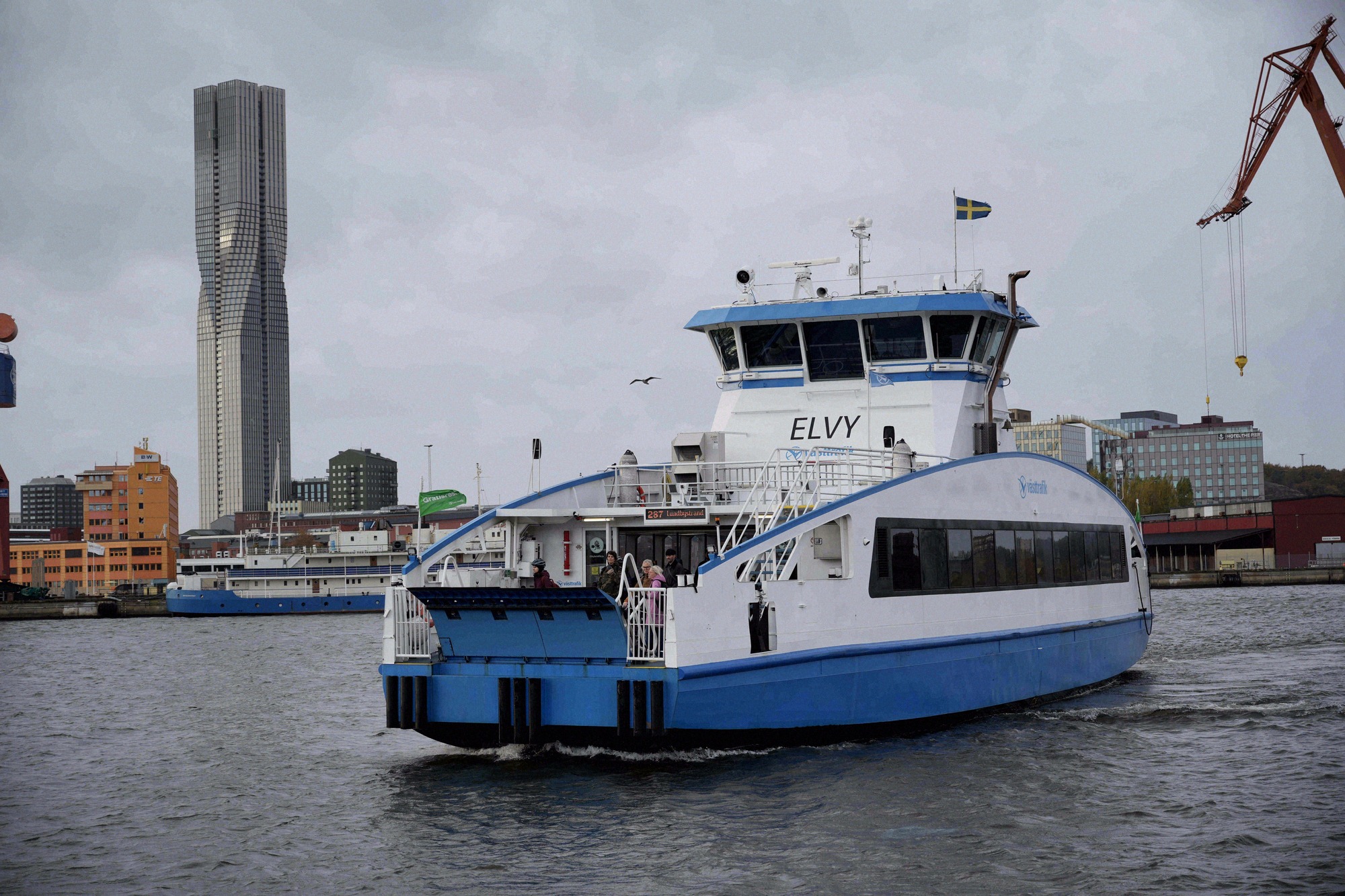
Ferries across the Göta älv
Boats are part of the public transport network too, and it's worth knowing the two lines apart:
- Line 286 (formerly Älvsnabbare) shuttles between Stenpiren and Lindholmspiren on weekdays and is free, the City of Gothenburg covers the cost. No ticket needed.
- Line 285 (formerly Älvsnabben) links Stenpiren via Lindholmspiren with the Eriksberg and Klippan ferry piers, it's fare-paying, though a standard Zone A ticket covers it.
Bikes travel free on both lines. The short crossing of the Göta älv doubles as a cheap mini boat trip with views over the harbour and skyline, well worth taking if you already hold a day ticket.
Out to the archipelago
For a trip to the car-free islands off the city, head to Saltholmen in the south, which the tram takes you to directly. The southern archipelago fleet operates under contract to Västtrafik (run by Styrsöbolaget) and splits into four lines:
- Line 281, serves Donsö and Vrångö, among others.
- Line 282 - Styrsö, Brännö Husvik and other piers.
- Line 283 - Asperö and Brännö Rödsten.
- Line 284 - Knarrholmen and Stora Förö.
All four lie within Zone A and are covered by a standard Västtrafik ticket, an ordinary single or day ticket is enough. Frequency and crossing times vary by pier, so it's worth checking the individual timetables in the app before setting off. For which island suits which kind of day, see the guide The Gothenburg Archipelago; the POI page on the Gothenburg Archipelago also gives an overview.
Bike hire and getting around on foot
If you'd rather pedal, Styr & Ställ (run by Nextbike) is a year-round bike hire scheme with over 130 stations across Gothenburg and Mölndal. The pricing is straightforward:
- Annual card - 300 kr for twelve months, with the first 60 minutes of every ride free.
- Pay-as-you-go - 20 kr per 30 minutes, capped at 300 kr per 24 hours.
Bookings and unlocking happen through the Nextbike app. For many trips in the centre you won't need transport at all: Avenyn, Liseberg, Haga, Universeum and Slottsskogen are all within walking distance or a short tram ride. From the trade fair and Avenyn area to Liseberg, for example, it's only about 0.7 kilometres, roughly an eight-minute walk.
App, accessibility and the Gothenburg Pass
The easiest way to buy tickets and plan journeys is the Västtrafik To Go app. It's available in English and offers the journey planner (Reseplaneraren), ticket purchase, real-time vehicle tracking, disruption alerts and saved favourites. If you prefer paper, Västtrafik publishes an official network map, "Spårvagn, stombuss och båt", as a PDF.
On accessibility, Gothenburg is well set up: low-floor trams and buses are wheelchair accessible, with automatic, self-operable ramps. According to Västtrafik, almost all vehicles are accessible, exceptions include around 15 per cent of trams and some boats. There's also a companion card (ledsagning) that lets a travelling companion ride free (subject to local council approval), while the cardholder still needs a valid ticket of their own; for those unable to travel independently, there's also the dedicated Färdtjänst service.
One common misunderstanding concerns the Gothenburg Pass, also sold as the City Card: public transport is no longer included. The pass covers attractions and hop-on hop-off tours, and you buy tram, bus and ferry tickets separately. Whether it's worth it for your itinerary is covered in the guide to the Gothenburg City Card.