
Activities
Day Trips from Gothenburg
Marstrand, Bohuslän & more
Overview
Car-free archipelago islands on a standard Västtrafik ticket, plus Marstrand, the Bohuslän coast and Trollhättan, the island world off Gothenburg and the best day trips on the west coast.
Marstrand, Bohuslän & more
The southern archipelago is one of the most uncomplicated natural experiences a big city can offer: car-free islands, reached on a standard public transport ticket, close enough that half a day is enough for a first taste. If you want more of the west coast, the day trips from Gothenburg cover worthwhile destinations from Marstrand to Trollhättan. This page brings both together, with lines, prices and tips for planning.
The starting point for almost every trip into the archipelago is Saltholmen in the south-west of the city. In 2026, tram line 11 runs there year-round from the centre in around 35 minutes; the summer timetable adds line 9, plus bus 114 from Brunnsparken as a feeder route. From the tram terminus it's only a few steps to the ferry jetties, no car is needed, and the islands are car-free anyway.
The ferries are operated by Styrsöbolaget (part of Transdev), and they are part of the regular Västtrafik public transport network in Zone A. That means the same ticket works as for tram and bus: a single fare costs 38 SEK for adults and 29 SEK for young people (as of 9 June 2026), valid for 90 minutes; the day ticket costs 125 SEK, and children under 7 travel free with an adult. Tickets are available via the Västtrafik To Go app, from ticket machines, or on board (card payment accepted).
A limited number of direct sailings from Stenpiren in the city centre run on lines 281 and 282, weekdays at around 10:50 and 17:00. For most day visitors, Saltholmen remains the more practical starting point.
| Line | Route | Service |
|---|---|---|
| 281 | Saltholmen - Köpstadsö - Styrsö Bratten - Donsö - Vrångö | year-round, main line to the southern tip |
| 282 | Saltholmen - Köpstadsö - Styrsö Bratten - Styrsö Tången - Brännö Husvik | year-round |
| 283 | Saltholmen - Asperö - Brännö Rödsten | year-round |
| 284 | Saltholmen - Knarrholmen - Stora Förö | year-round; only a few sailings in the winter half-year, some by reservation |
Individual sailings also call at smaller jetties such as Styrsö Skäret, Kårholmen or Asperö Östra. The summer timetable runs from 1 June to 23 August; outside this period the core lines run noticeably less often. Ferries to the larger islands typically run roughly once an hour, it's worth checking the exact frequency shortly beforehand in the Västtrafik journey planner.
Rough crossing times from Saltholmen: Brännö around 20 minutes, Styrsö around 30 minutes, Donsö 40 to 50 minutes, Vrångö as the terminus around 60 minutes. Because several islands sit on the same line, island-hopping is straightforward, for example, ride all the way to Vrångö first and stop off at Styrsö or Donsö on the way back.
Styrsö is the classic starting point, combining wooden villas with rugged archipelago scenery: around 1,400 residents, swimming rocks such as Utterviksbadet and walking trails, all easy to explore on foot. Near the Bratten jetty is the seasonally open Café Öbergska (opening days vary). If you're staying longer, there are places such as Kusthotellet Styrsö or the Guesthouse Styrsö Tången, in the evening, once the day-trippers have left, the island gets noticeably quieter.
Vrångö, the southernmost inhabited island, has the group's best swimming spots: the long sandy beach at Nötholmen is shallow and usually calm, with rock pools for children at one end and shallow water at the other. Large parts of the island are protected as a nature reserve, crossed by around 8 km of walking trails, including the low-barrier Tärnstigen path. For food, there's the year-round Hamnkrogen Lotsen with its own fish shop (reduced days in the winter half-year) and the seasonal restaurant Ternan, which opens from early May.
Brännö is served by two jetties - Husvik (line 282) and Rödsten (line 283), and is known for "Dans på Brännö Brygga": in 2026, dancing takes place at the Husvik jetty on six Thursday evenings between 25 June and 30 July (19:30 to 22:00 each time), with the closing evening on Saturday, 8 August; a special boat runs to the dance evenings from Stenpiren. From the south of Brännö, a walking trail leads into the Galterö nature reserve, with grazing sheep. Places to stay include Brännö Värdshus or Pensionat Baggen.
Donsö shows the archipelago's maritime heritage most clearly: the island, with around 1,500 residents, is home to shipping companies and an active fishing fleet, plus shops, a bakery, a smokehouse and a year-round guest harbour. If you want to stay overnight here, Isbolaget Hotell & Restaurang is an option.
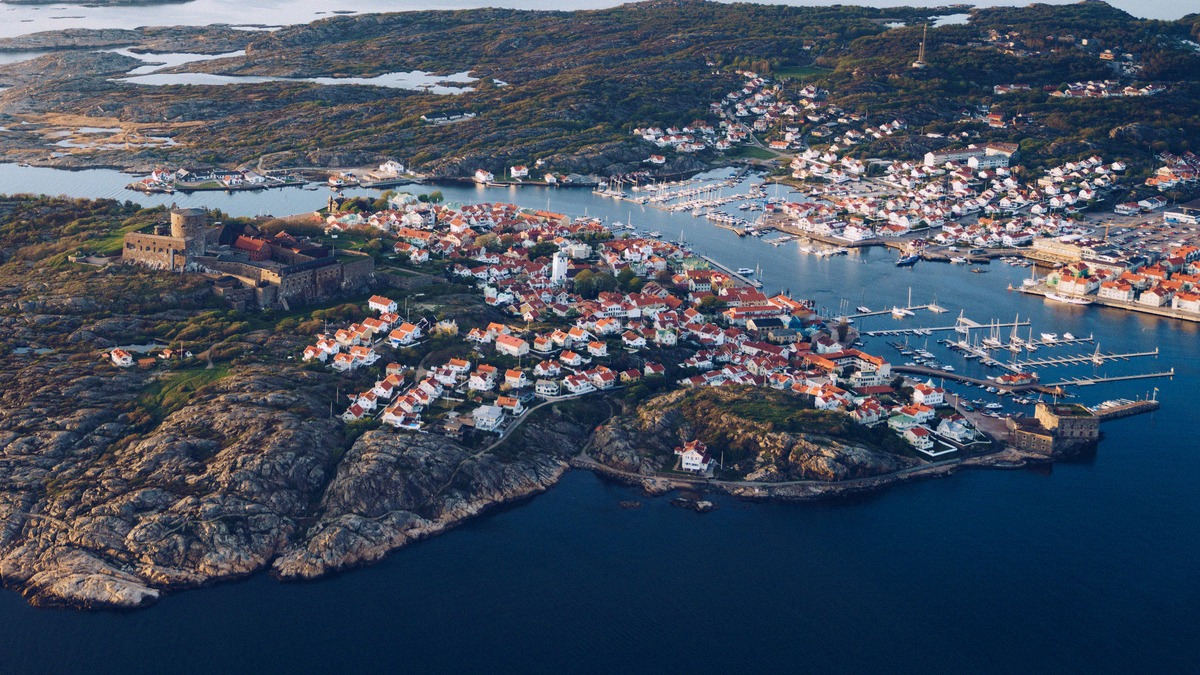
If you can spare a full day, some of the finest destinations on the Swedish west coast are within reach of Gothenburg. The easiest trip is to Marstrand: buses 302 and 312 run there direct from Central Station, and the car-free fortress island with Carlsten Fortress (120 SEK, children aged 5 to 15 60 SEK) is a two-minute mini-ferry crossing away. With a car, it's worth considering the fishing villages of Smögen and Fjällbacka on the Bohuslän coast, the baroque Läckö Castle on Lake Vänern (from 110 SEK, free under 26) and Trollhättan with its lock area, the water spectacle at the falls only happens in 2026 during Fallens Dagar, from 17 to 19 July. All these destinations, with how to get there, prices and season, are compared in our guide to day trips from Gothenburg.
The archipelago is largely self-catering territory, the food and drink options are seasonal and limited on the smaller islands. Bring swimwear, water and provisions, plus sturdy shoes for the rocks. Check the ferry timetable in advance, especially outside the summer season, and start early in high summer, when the ferries fill up quickly. Bicycles are allowed on board, space permitting; from 1 June, rental bikes (Styr & Ställ) are also available at Saltholmen. A tried and tested plan is Styrsö as a starting point, combined with a swim stop on Vrångö or a detour to Brännö towards Galterö.