
Getting There & Around
Overview
Direct ferry from Kiel, flights to Landvetter, trains via Copenhagen or driving via the Øresund Bridge, every route into Gothenburg with times and prices, plus trams, buses and harbour ferries once you're there.
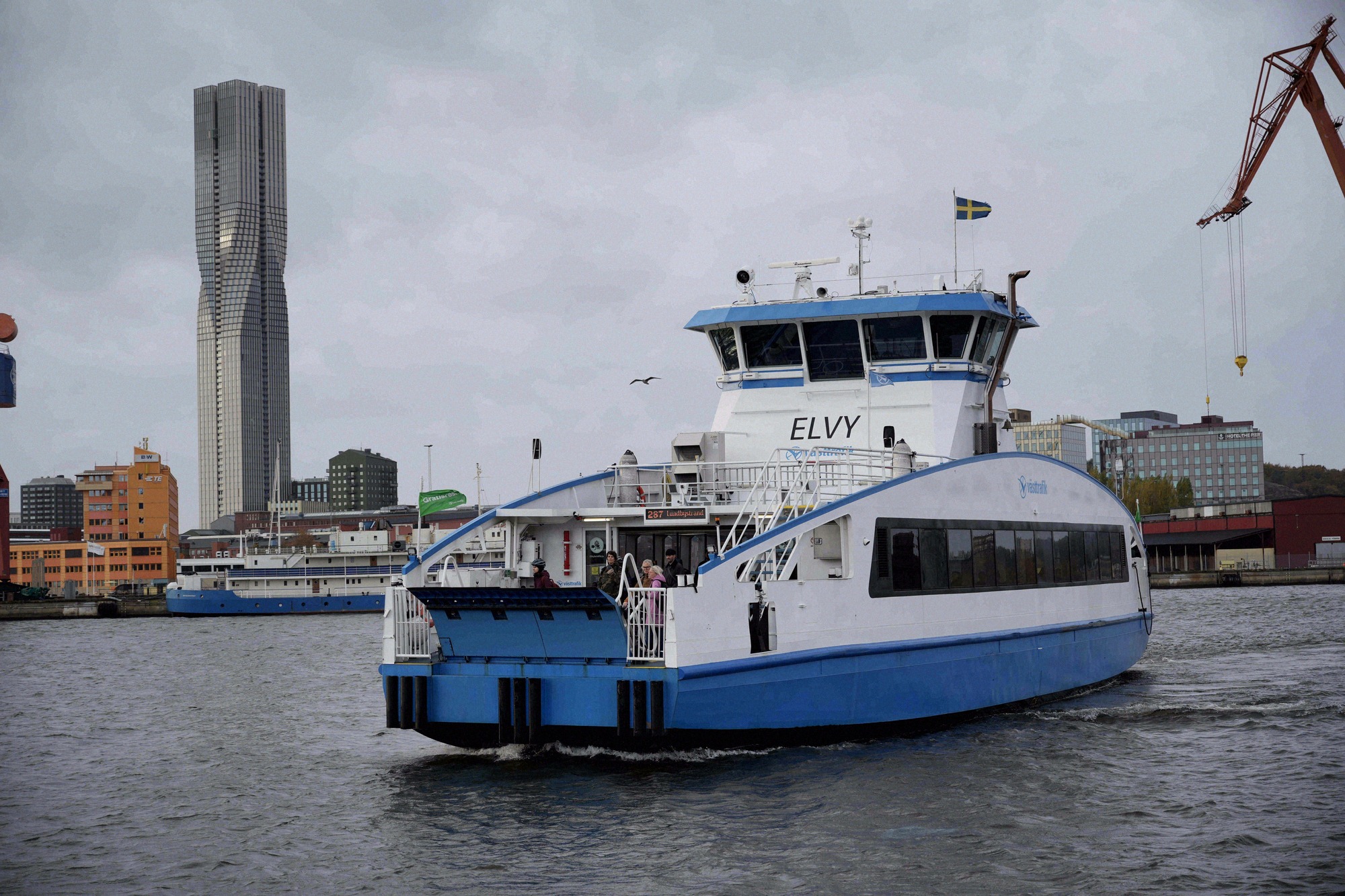
Gothenburg sits on Sweden's west coast and is reachable from abroad in four main ways, by direct ferry, flight, train or car. Which one makes sense depends mainly on whether you want to bring your own car and how much travel time you can spare. Once you've arrived, you won't need a car at all: trams, buses and harbour ferries all run under the Västtrafik umbrella.
| Route | Duration | Price (guide) | Best for |
|---|---|---|---|
| Ferry from Kiel | approx. 14 hrs (overnight) | Person + car + compulsory cabin from approx. 171-241 euros | Bringing your own car, no detour |
| Ferry from Frederikshavn | approx. 3-3.5 hrs | Car + driver from approx. 100 euros | Driving via Denmark, more flexible |
| Flight to Landvetter | approx. 1.5-2 hrs + 40 min coach | Depends on dates, coach 119 SEK | Fastest way in without a car |
| Train via Copenhagen | approx. 8-9 hrs from Hamburg | Individual legs from approx. 29 euros | Relaxed travel without a car |
| Car via the Øresund Bridge | approx. 7-8 hrs from Hamburg | Toll 465 DKK online / 520 DKK at the booth | Road trips with stops along the way |
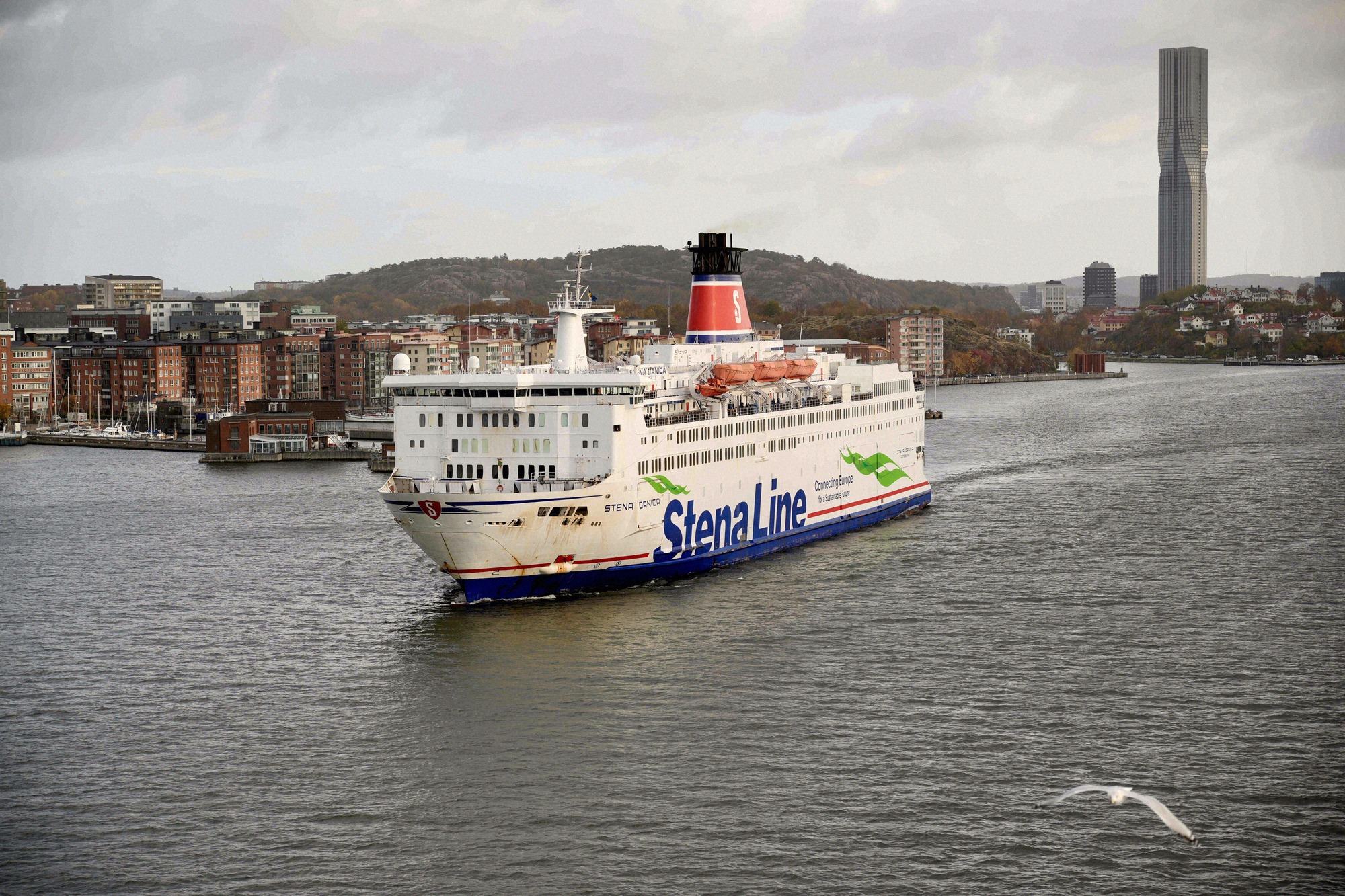
Gothenburg's standout option is the direct ferry from Kiel in Germany, which Stena Line runs daily as an overnight crossing: board in the evening, arrive the next morning after about 14 hours, the ship docks right in the city centre, with no long transfer afterwards. Because it's an overnight sailing, a cabin is compulsory and built into the ticket; one person with a car and the required cabin starts at around 171 to 241 euros, with the cabin alone costing at least around 158 euros. Stena Line offers only limited foot-passenger fares, and prices vary considerably by season and day of the week.
A cheaper and more flexible option is the short crossing from Frederikshavn in Denmark: about 3 to 3.5 hours at sea, up to six sailings a day in peak season, car and driver from around 100 euros, and no cabin required. Both routes, the ships, and the way from the terminal into the city centre are compared in detail in the guide Ferry to Gothenburg.
Gothenburg Landvetter Airport (GOT) lies about 25 kilometres east of the city and has nonstop connections from several European cities: Lufthansa flies from Frankfurt and Munich, Eurowings from Berlin and Düsseldorf, Swiss from Zurich, and Austrian Airlines seasonally from Vienna. Within Sweden, SAS mainly serves Stockholm Arlanda and Visby.
Landvetter has no rail link, but a well-established airport coach fills the gap: Vy Flygbussarna runs to Nils Ericson Terminal at Gothenburg Central Station, around 40 minutes from Gothenburg Central Station depending on traffic, about 20 minutes from the Korsvägen interchange, every 15 to 20 minutes at peak times. Tickets cost 119 SEK online or in the app, 139 SEK on board; they include 90 minutes of onward travel on Västtrafik public transport, and up to two children under 8 travel free per paying adult. Alternatives include FlixBus (route 691), Västtrafik buses via Landvetter Resecentrum, a fixed-price taxi (approx. 450 to 490 SEK) and car hire from around 400 SEK per day. Stops, night departures and how to buy tickets are covered in the guide Landvetter Airport to the city centre.
By train, the route from Germany runs via Denmark. From Hamburg Hauptbahnhof, direct EC/IC trains (DB/DSB) run several times a day to Copenhagen, around 4.5 hours, from about 29 euros. Onward to Gothenburg, the direct Öresundståg takes about 3 hours 53 minutes (from around 16 to 40 euros); the SJ high-speed train is slightly faster at around 3.5 hours but requires changing trains in Malmö. There are at least 15 daily connections on the Copenhagen-Gothenburg stretch. All told, budget roughly 8 to 9 hours total travel time from Hamburg; booking the legs separately is often cheaper than a through-ticket.
From Hamburg to Gothenburg it's about 640 kilometres via the A1/E47 and the Fehmarn crossing at Puttgarden, then the Øresund Bridge and the E6, driving time without traffic is roughly 7 to 8 hours. The main cost to plan for is the bridge toll: for a car up to six metres long, this is 520 DKK at the booth (around 72 euros) and 465 DKK online (around 64 euros; the online ticket is valid for 30 days) from 18 May 2026. Frequent drivers can cut the toll to 182 DKK (around 25 euros) per crossing with an ØresundGO subscription (51 euros a year). If you'd rather avoid the toll but still want your car with you, either ferry route is the alternative.
Once you're in the city centre, parking is the tricky part: on-street rates run up to around 40 SEK per hour depending on location, and car parks start at about 50 to 60 SEK for 24 hours. If you can, leave the car near your hotel and use the tram to get around.
You won't need a car in Gothenburg itself. City transport runs on Västtrafik, covering trams, buses, ferries and a commuter rail line, the blue trams form the largest tram network in the Nordic countries. From 9 June 2026, a single Zone A ticket costs 38 kr (valid for 90 minutes), a 1-day ticket 125 kr, and a 3-day ticket 250 kr; the city and the southern archipelago both lie entirely within Zone A. The harbour ferry on route 286 between Stenpiren and Lindholmspiren is even free on weekdays, and Styr & Ställ hire bikes cost 20 kr per 30 minutes. For how to combine trams, archipelago ferries and hire bikes, see the guide Public transport in Gothenburg.